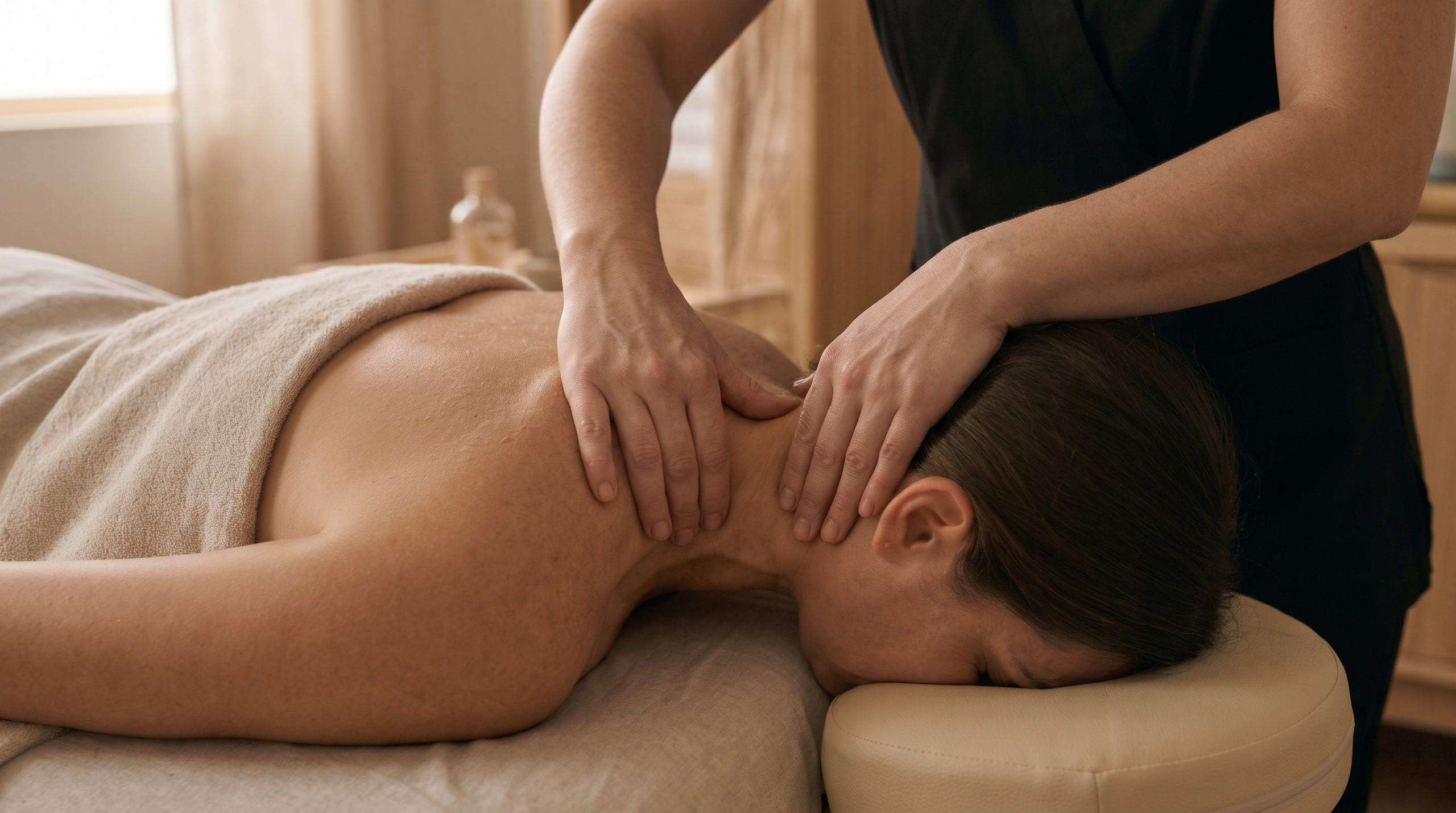
You book a massage hoping to ease a stiff neck. Then you spend an hour being gently soothed while the knot stays exactly where it was. Or you scan a treatment menu full of unfamiliar names and simply pick the one that sounds most relaxing.
It happens more often than you might think. Massage is not a single treatment. Different techniques use different pressure, movements and goals. Knowing how they differ can help you choose one that suits what your body actually needs.
Why Massage Is Not One-Size-Fits-All
Massage works on the body’s soft tissues, such as muscles, tendons and the connective tissue around them. Beyond that shared starting point, techniques vary a great deal.
Some use slow, flowing strokes to help you unwind. Others apply firm, focused pressure to specific areas. Lymphatic drainage, which is often grouped with massage, works differently again. Its aim is to encourage fluid to move rather than to work the muscles. If your tension is linked to stress and burnout, a calming style may feel very different from one designed for a stubborn sore spot.
Swedish Massage for General Tension
Swedish massage is what many people picture when they think of a massage. It uses long, gliding strokes and kneading, with light to medium pressure.
It tends to suit first-timers and anyone with mild, general stiffness. The focus is on comfort and relaxation rather than working deep into one problem area.
Deep Tissue Massage for Persistent Tightness
Deep tissue massage uses slower, firmer pressure to reach deeper layers of muscle and fascia. Fascia is the thin sheet of connective tissue that wraps around your muscles.
People often choose it for long-standing tightness in the back, neck or shoulders. Some tenderness the next day is common, a bit like after a hard workout. It should not feel painful during the session, though, so speak up if it does.
For ongoing low back pain, NICE guidance suggests considering massage alongside exercise as part of a wider plan.
Lymphatic Drainage for Fluid and Swelling
Manual lymphatic drainage, often shortened to MLD, sits at the opposite end of the scale. Although it often appears on massage menus, specialists see it as a distinct treatment rather than a massage in the usual sense. It uses very light, rhythmic, repeated movements that follow the natural direction of lymph flow.
The aim is to support the lymphatic system, which carries excess fluid away from the body’s tissues. As the NHS explains, this system has no central pump like the heart. Instead, it relies on the movement of surrounding muscles. Many lymph vessels sit close to the skin’s surface, which is why the pressure stays so gentle.
MLD is often used as part of care for lymphoedema, a condition that causes long-term swelling. In these cases, Macmillan advises having it only from a trained lymphatic drainage therapist. It is also why MLD and deep tissue work are rarely combined. Put deep tissue vs lymphatic drainage side by side and the pressure, pace and purpose are almost opposite, so the two are usually booked as separate sessions.
Sports Massage and Trigger Point Therapy
Sports massage focuses on the muscles you use during exercise. It often blends several techniques with stretching. It can be used before activity or as part of recovery afterwards.
Trigger point therapy targets small, tight spots within a muscle, often called knots. These can cause referred pain, which means discomfort felt somewhere other than the knot itself. A tension headache linked to tight shoulders is a common example.
Comparing These Treatments at a Glance
Here is a quick summary of how these approaches differ.
| Treatment | Pressure | Method | Often Chosen For | How It May Feel |
|---|---|---|---|---|
| Swedish massage | Light to medium | Long, flowing strokes | General tension and relaxation | Calming |
| Deep tissue massage | Firm | Slow, concentrated pressure | Persistent muscle tightness | Can leave muscles tender |
| Lymphatic drainage | Very light | Rhythmic movements following lymph flow | Fluid retention and swelling | Barely felt |
| Sports massage | Varies | Mixed techniques with stretching | Activity and recovery | Brisk and targeted |
| Trigger point therapy | Focused | Direct pressure on knots | Localised or referred discomfort | Intense in small areas |
What to Consider Before Booking a Treatment
Start with the physical concern itself. General tension, one specific tight area and unexplained swelling are very different starting points. Each points towards a different approach.
Next, think about your expectations. Would you rather leave feeling relaxed, or are you comfortable with firmer work that may leave you a little sore? Being clear about pressure helps your therapist plan the session.
Finally, consider whether you need professional guidance first. According to NCCIH, massage appears to carry few risks when a trained practitioner carries it out, but some health conditions call for extra care. It is sensible to speak to your GP first if you are pregnant, have had recent surgery, have a history of blood clots, are having cancer treatment or have swelling with no clear cause. You can also use the CNHC register to check that a massage therapist is registered.
Finding the Right Fit for Your Body
Booking the wrong treatment is not a disaster. It can, however, leave you feeling that massage simply does not work for you, when the real issue was a mismatch between the technique and the need.
Swedish, deep tissue and sports massage each have their own purpose, and lymphatic drainage serves a different one again. None is better than the others overall. Think about what your body needs and get advice where necessary, and you can choose with more confidence. Your chosen treatment can then sit alongside the small daily habits that support how you feel day to day.