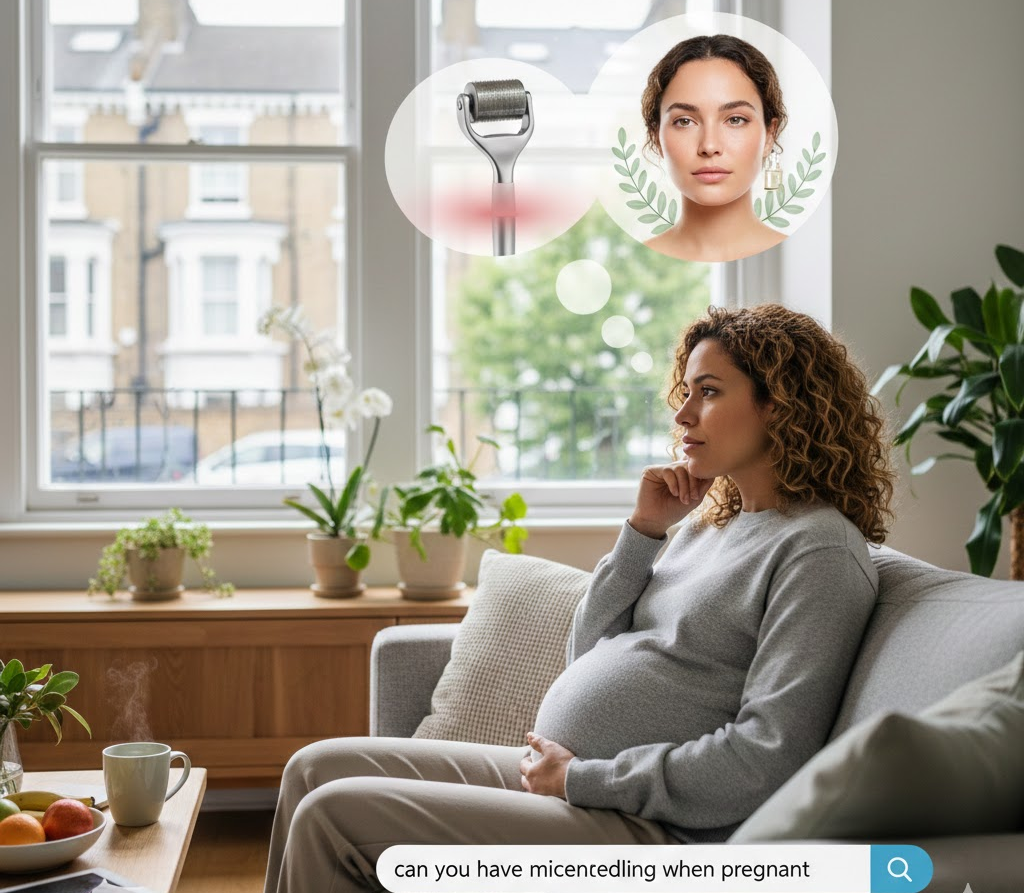
If you want clear advice before booking your next skin clinic visit, here it is: Most health and skincare experts do not recommend microneedling during pregnancy.
Microneedling does not use strong chemicals that enter the bloodstream; it depends on your body’s natural healing process to repair skin and produce collagen.
During pregnancy, your immune system and skin sensitivity change a lot. This increases the risk of infection, scarring, and uneven skin tone. It is best to wait until after your baby is born to have this treatment.
My Story: Self-Care and Safety
As a health and well-being coach based in London, I prioritise self-care. I work with many women who want to maintain their routines and feel good during pregnancy, which often includes skincare and beauty treatments.
I remember when I was pregnant, looking in the mirror and noticing the “pregnancy mask” (melasma) starting to show. I realised I had overlooked the glow that good clinical care can provide. I wanted to “fix” my skin, but I also knew my body was already under a lot of stress from growing a baby.
In my work, I always encourage a balanced view of health. Just as I’ve written about the confusion surrounding eating burrata when pregnant or even the safety of truffles during pregnancy, the question of can you have microneedling when pregnant comes down to weighing up the rewards against the unique risks of this life stage.
Making these decisions shouldn’t feel like losses. It’s about making informed choices that protect your health and energy while your body does its essential work.
Many ask about body aesthetics in addition to facial treatments. If you are curious about other procedures, like laser hair removal, you can read my complete guide on whether you can get laser hair removal while pregnant. This guide explains how light-based therapies differ from needling.
What is Microneedling?
To understand the doubts about this treatment, we first need to look at how it works. Microneedling, also called collagen induction therapy, uses a device with tiny needles to create many small, barely noticeable holes in the skin’s top-layer.
The idea behind this is “managed harm.” These small wounds prompt your body to produce new collagen and elastin to help heal the “injuries.” This leads to smoother, firmer skin with a more even tone. Usually, this is a very effective way to treat scars or fine lines.
However, during pregnancy, your body’s healing and inflammatory responses change. This makes it harder for your skin to handle this “controlled injury.”
You can find more detailed information about the procedure on the British Association of Dermatologists, which explains how these micro-channels work.
Why Professionals Advise Against It During Pregnancy
Many practitioners do not offer microneedling treatment to pregnant women because there are not enough clinical trials to prove it is entirely safe. There are also several reasons related to pregnancy that affect the safety of this treatment.
-
Risk of Infection
During pregnancy, a woman’s immune system weakens to protect the baby. Because microneedling creates tiny openings in the skin, the risk of infection increases. Even in a clean clinic in London, a pregnant woman’s body might struggle to fight off bacteria.
-
The Melasma Factor
Hormonal changes during pregnancy can increase melanin production, leading to dark facial spots, known as melasma. While microneedling is sometimes used to treat hyperpigmentation, the treatment could actually worsen or cause these dark spots during pregnancy.
For a clearer explanation on health problems during pregnancy, explore this NHS guide for more information on managing these changes.
-
Slower Healing and Scarring
As the body focuses on supporting the baby, the skin might take longer to heal. This can lead to unusual scarring or “track marks” that wouldn’t usually happen.
-
Topical Anaesthetics
Most microneedling sessions require numbing cream, such as lidocaine. Although it is applied to the skin, there is a slight chance that some can enter the bloodstream. Many healthcare providers avoid these anaesthetics during pregnancy unless they are necessary for medical reasons.
Health Professional’s Tip: Pregnancy-Safe Skin Alternatives
Even if you can’t get microneedling for a few months, you can still care for your skin. In my coaching, I always highlight ways to boost your energy and improve skin health. During pregnancy, we shift from “active correction” to “supportive nourishment.”
If you miss the glow that microneedling gives, try these gentle, effective alternatives that are generally safe for pregnant women:
- Bakuchiol: This plant-based ingredient is known as “nature’s retinol.” It helps your skin renew itself without the risks of Vitamin A.
- Lactic Acid: A mild acid that exfoliates the top layer of your skin, giving you a glowing look without going too deep.
- Vitamin C: This vitamin helps fight the dullness from pregnancy fatigue and evens out your skin tone.
- Facial Massage: Use a Gua Sha tool or just your hands to boost circulation and encourage lymphatic drainage, giving your skin a natural lift without needles.
Nutritional Support for Your Skin
Real health starts from within. While microneedling works on the outside, you can improve your skin’s elasticity and glow through what you eat. Focus on foods rich in nutrients that help collagen, like Vitamin C (found in citrus fruits and peppers) and Zinc (found in pumpkin seeds and dairy).
If you are already following my advice on eating burrata when pregnant, you are already getting a good dose of the proteins and fats that keep skin looking plump and healthy.
Quick Guide: Skincare Safety Comparison
| Treatment | Pregnancy Status | Recommendation |
| Microneedling | Avoid | Higher risk of infection and hormonal pigmentation (melasma). |
| Chemical Peels (Strong) | Avoid | High-strength salicylic or glycolic peels can be absorbed systemically. |
| HydraFacial | Safe | Generally safe, but always ask the therapist to omit any salicylic acid steps. |
| LED Light Therapy | Safe | A fantastic non-invasive way to boost collagen and calm inflammation. |
| Retinoids/Retinol | Avoid | High doses of Vitamin A are linked to developmental risks. |
| Oxygen Facials | Safe | Great for deep hydration and that “red carpet” glow without any trauma. |
The Final Verdict
Putting your self-care routines on hold can be tough, especially during pregnancy. As a health professional, I encourage my clients to see this time as an opportunity to focus on maintenance and mindfulness rather than strict changes.
Is microneedling safe during pregnancy? Generally, the answer is no. While it isn’t a “toxic” treatment, it’s better to wait until after your baby is born. The main concerns include a higher risk of infection due to a weakened immune system, a risk of worsening hormonal pigmentation (melasma), and a lack of research on the safety of topical numbing agents during pregnancy.
Trust that your skin will regain its strength. Focus on small, regular actions, such as using pregnancy-safe products and staying hydrated, to help you feel balanced and energised. You can schedule those advanced treatments once your baby arrives.
For more advice on guiding the “can I or can’t I” of pregnancy wellness, from safe luxury foods like truffles to building better energy habits, feel free to explore the rest of my blog or get in touch for a personal consultation.