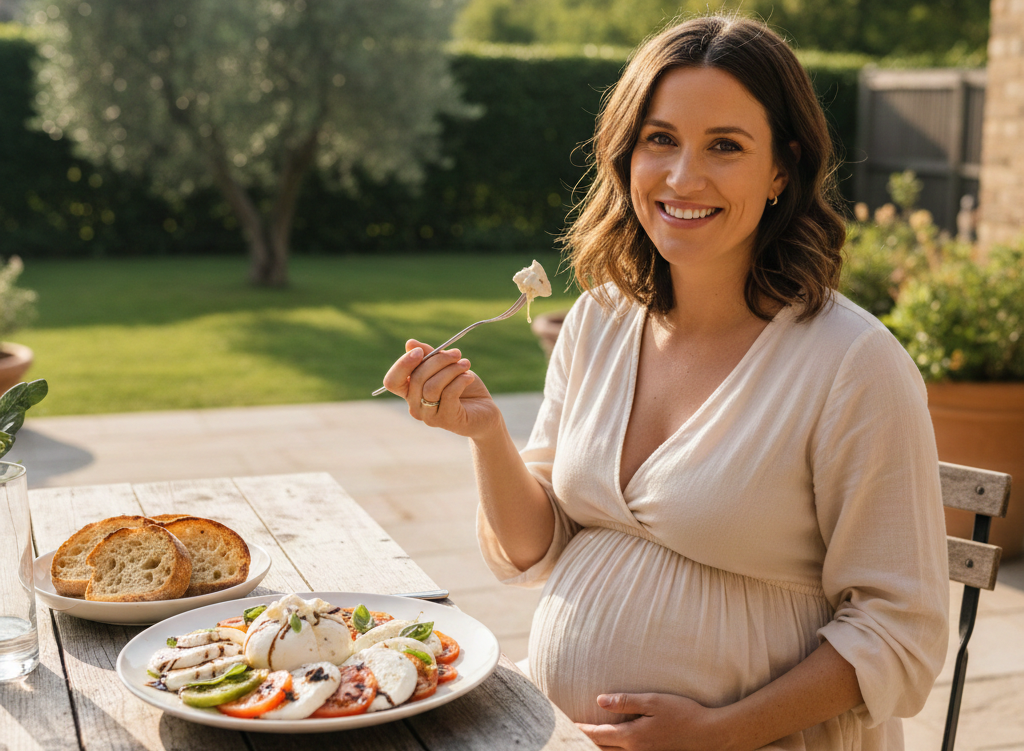
The Quick Answer
If you are looking for a fast answer so you can get back to your lunch, here it is: Yes, you can safely eat burrata while pregnant, provided it is made from pasteurised milk.
In the UK, the vast majority of burrata sold in supermarkets is pasteurised and perfectly safe. However, you should always check the label for the word pasteurised or ask at a restaurant to ensure it is not a “raw” or unpasteurised variety, as these carry a higher risk of Listeria.
My Story: Pregnancy Food Rules
As a health and well-being coach based in London, I spend my days helping clients build realistic routines and a balanced approach to food. But I know that the moment that pregnancy test shows a positive result, “balance” often gets replaced by “bewilderment.”
Suddenly, your relationship with food changes. You aren’t just eating for energy or enjoyment anymore; you are scanning every menu like a detective. I have sat with many clients who feel overwhelmed by the long lists of “forbidden” foods, and burrata is one of those luxury items that often causes a lot of anxiety.
I remember the first time I had to navigate these rules myself. I was at a lovely Italian spot in Marylebone, staring at a plate of creamy burrata and heirloom tomatoes. I found myself questioning if the “ooze” in the centre counted as a soft cheese risk. It made me realise that even with my formal qualifications in health and nutrition, the emotional weight of wanting to do the best for your baby can make any decision feel heavy.
That experience is exactly why I wanted to write this. My goal is to move away from the fear-based headlines and give you the practical, science-backed information you need to enjoy your food safely. You deserve to have better energy and healthy habits without the constant worry.
Why the Confusion?
The reason many people ask can you eat burrata when pregnant is because of its unique texture. Burrata is essentially a pouch of mozzarella filled with a mixture of soft cheese curds and fresh cream. Because it is so soft and moist, it falls into the category of cheeses that could harbour bacteria if the production process isn’t strictly controlled.
The good news is that for most of us in the UK, the NHS guidelines on soft cheese are quite clear. If the milk has been heat-treated to kill harmful bacteria (pasteurisation), the risk is significantly lowered.
What Exactly is Burrata?
To understand why this cheese causes so much debate, we have to look at how it is made. Burrata is often mistaken for standard mozzarella, but it is actually a two-part delicacy. The outer shell is a solid layer of mozzarella, while the inside is filled with stracciatella (shredded cheese curds) and fresh cream.
When you cut into it, the centre spills out. This high moisture content and “soft” interior are what trigger the alarm bells for many expectant parents. In the world of food safety, moisture and low acidity can be a playground for bacteria. However, the safety of the cheese does not actually depend on its texture; it depends entirely on the starting point of the milk.
The Safety Deep-Dive: Listeria and Pasteurisation
The primary concern when people ask can you eat burrata when pregnant is a bacterium called Listeria monocytogenes. While listeriosis is rare, it can cause complications during pregnancy, which is why we take it so seriously in the health community.
Listeria is destroyed by the process of pasteurisation, where milk is heated to a specific temperature for a set period. If your burrata is made from pasteurised milk, the risk of Listeria is considered very low.
According to the Food Standards Agency, pregnant women are advised to avoid soft, mould-ripened cheeses (like brie or camembert) or unpasteurised soft cheeses. Since burrata is a fresh cheese and does not have a “fuzzy” white rind, it is safe to eat as long as the label confirms it is pasteurised.
Why the Origin Matters
In the UK, our food safety standards are exceptionally high. Most commercially produced burrata found in major retailers is pasteurised by default to ensure a longer shelf life and consumer safety. The risk usually increases with “raw” or artisan cheeses found at small farm shops or imported directly from regions that prefer traditional, unpasteurised methods.
When you are out for dinner, it is always worth a quick check. A simple “Is this made with pasteurised milk?” is a completely normal question for a health-conscious diner to ask. Most restaurants are well-versed in these requirements and can give you an answer immediately.
Quick Guide: Cheese Safety During Pregnancy
| Cheese Type | Safety Status | Why? |
| Pasteurised Burrata | Safe | The milk has been heat-treated to kill Listeria bacteria. |
| Mozzarella & Ricotta | Safe | These are fresh, pasteurised cheeses with no mould-ripened rinds. |
| Unpasteurised Burrata | Avoid | Often found in artisan markets; carries a higher risk of bacterial contamination. |
| Brie & Camembert | Avoid | Even if pasteurised, their moist rinds are a breeding ground for Listeria (unless cooked until steaming hot). |
| Stilton & Danish Blue | Avoid | Soft blue-veined cheeses have high moisture and low acidity, which bacteria prefer. |
| Cheddar & Parmesan | Safe | Hard cheeses are naturally acidic and low in moisture, making them very safe. |
How to Shop and Order Safely in the UK
Navigating the dairy aisle or a restaurant menu does not have to be stressful. In the UK, we are fortunate that food labelling laws are quite robust. When you are looking for that perfect creamy fix, here is how to ensure you are making a safe choice for you and your baby.
Checking the Label
When shopping at supermarkets like Waitrose, Sainsbury’s, or M&S, turn the packet over and look at the ingredients list. By law, if a cheese is made with raw milk, it must be clearly labelled as unpasteurised. If the label states “pasteurised milk” or simply does not mention unpasteurised processes, it is generally safe to consume. Most big brands use pasteurised milk to ensure their products stay fresh during transport and storage.
Eating Out at Italian Restaurants
London has some of the best Italian eateries in the world, and burrata is a staple on many menus. When you are dining out, do not be afraid to ask your server about the cheese. A quick question such as “Is the burrata pasteurised?” is all it takes. Most reputable restaurants use pasteurised dairy for their fresh cheeses, but it is always better to have that peace of mind so you can actually enjoy your meal.
The Artisan Exception
Be extra cautious at farmer’s markets or speciality Italian delis. These vendors often pride themselves on traditional, “crudo” (raw) methods. While these are delicious, they are best saved for after your pregnancy. Stick to the modern, heat-treated versions for now. If you find yourself browsing these markets and wondering about other gourmet ingredients, you can also read my guide on the safety of eating truffles during pregnancy.
Health Professional’s Tip: The Nutritional Side of Burrata
As a lifestyle coach, I always look at the bigger picture of a meal. We often talk about what to avoid during pregnancy, but it is just as important to talk about what to include for better energy and health.
Burrata is not just a treat; it actually offers some great nutritional benefits:
- Calcium: Essential for the development of your baby’s bones and teeth.
- Protein: Supports the growth of maternal and foetal tissue.
- Vitamin A: Important for immune function and eye health.
Balancing Your Plate
To keep your energy levels stable and avoid a post-lunch slump, I recommend pairing burrata with plenty of fibre. Instead of just having it with plain white bread, try it with roasted Mediterranean vegetables, a handful of rocket, or a slice of toasted rye sourdough. This balanced approach helps slow down the absorption of fats and keeps you feeling satisfied for longer.
For more advice on building these kinds of routines, you can check the British Nutrition Foundation guidelines on pregnancy which highlight the importance of a nutrient-dense diet.
Conclusion: Enjoying Your Burrata with Confidence
Contemplating food choices during pregnancy can feel like a full-time job, but it should not take the joy out of eating. As we have explored, the answer to can you eat burrata when pregnant is a heartening yes, provided you keep pasteurisation at the front of your mind.
By making small, informed choices like checking a label or asking a quick question at a restaurant, you are practicing the kind of consistent, healthy habits that lead to long-term well-being. Pregnancy is a time to nourish your body and your baby, and if a creamy ball of pasteurised burrata with fresh tomatoes makes you feel good, then it can absolutely have a place in your balanced diet.
Remember, the goal is not perfection, but rather a realistic and safe approach to the foods you love. Focus on the basics: stick to pasteurised dairy, pair your meals with plenty of colourful plants, and trust your ability to make great choices for your health.
The Final Verdict
Can you eat burrata when pregnant? Yes. You can safely enjoy burrata during pregnancy as long as it is made from pasteurised milk.
In the UK, most supermarket options meet this criteria. Always double check the packaging for “pasteurised” or confirm with restaurant staff to ensure the cheese is safe. Avoid any “raw” or unpasteurised versions until after your little one arrives.
For more support on maintaining healthy habits and better energy during your pregnancy journey, feel free to explore my other guides or get in touch for a personalised coaching session.