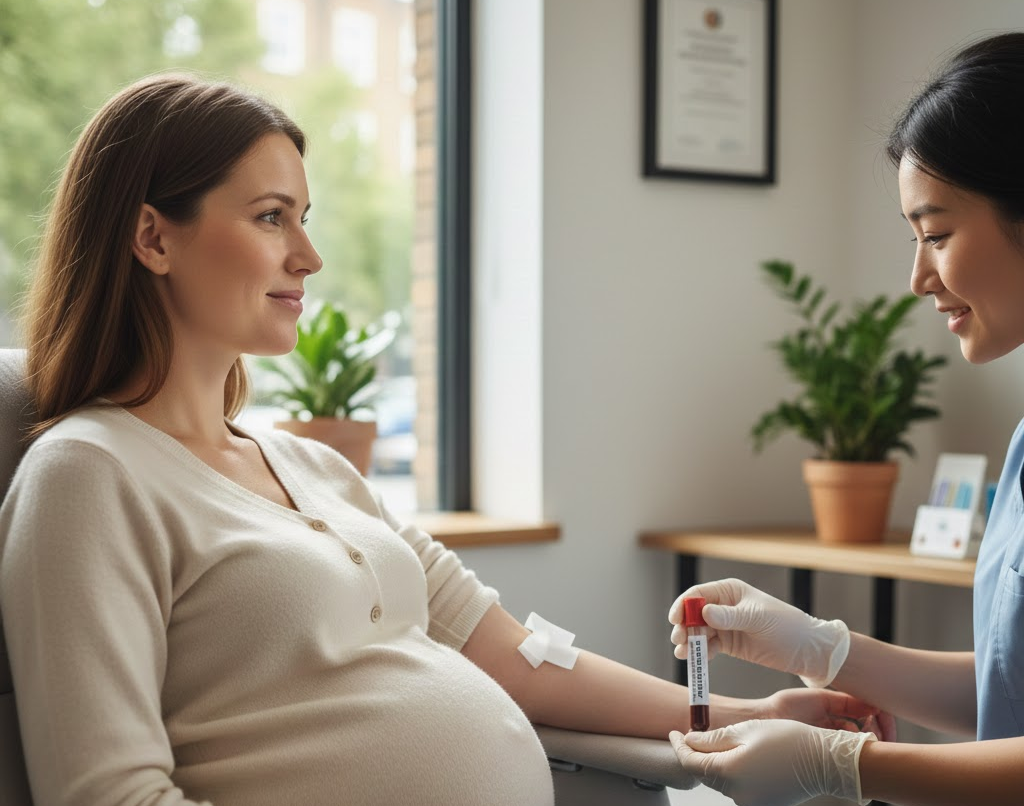
If you are looking for an immediate answer before exploring your options, here it is: Yes, you can safely get a DNA test while you are pregnant.
Unlike the invasive methods of the past, modern science allows for a Non-Invasive Prenatal Paternity (NIPP) test. This requires only a simple blood draw from the mother and a mouth swab from the potential father. Because it only involves a blood sample, there is zero risk of miscarriage or harm to your baby.
My Story: Facing the Unknown
As a health and well-being coach in London, I have learned that wellness is not just about diet and exercise; it’s also about having peace of mind. I have worked with clients who face the physical challenges of pregnancy while also dealing with emotional worries.
I remember talking to a woman who was afraid that getting a DNA test would mean a painful procedure that could harm her baby. She was stressed, couldn’t sleep, and felt unable to bond with her pregnancy because of her uncertainty.
I helped her see that her blood test, similar to her regular midwife appointments, could give her the clarity she needed. This was a big moment for her well-being.
Just as I promote informed decisions about tattoos during pregnancy or safe skincare, I believe that mental health is important for a healthy pregnancy. Seeking clarity is an important act of self-care.
How Does a Prenatal DNA Test Work?
In the past, prenatal DNA testing required “invasive” procedures like Amniocentesis or Chorionic Villus Sampling (CVS). These methods involve inserting a needle into the uterus to collect fluid or tissue, which carries a small risk of miscarriage.
Today, we use NIPP (Non-Invasive Prenatal Paternity) testing. This technology relies on Cell-Free DNA (cfDNA).
Starting around the 7th or 8th week of pregnancy, tiny bits of your baby’s DNA cross the placenta and enter your bloodstream. By taking a sample of your blood, scientists can identify these fetal DNA pieces and compare them to the DNA of the potential father.
Why NIPP is the Preferred Choice:
- Safety: There is no needle near the womb, meaning no risk to the pregnancy.
- Accuracy: High-quality labs have accuracy rates of 99.9% or higher.
- Early Results: Tests can usually be performed as early as 7 to 10 weeks into the pregnancy.
For clearer insight into the science behind this procedure, take a look at this practical guide that helps explain prenatal paternity testing safety and accuracy.
Important Considerations Before Testing
While the physical process is simple, there are a few things you should keep in mind as a health-conscious expectant mother.
-
Timing is Key
If you take the test too early (before the 7th week), there may not be enough fetal DNA in your blood. Most UK clinics recommend waiting at least the 9th week to ensure there is enough fetal DNA for an accurate result.
-
Choose an Accredited Lab
In the UK, you must use a lab accredited by the Ministry of Justice or that meets ISO 17025 standards. This ensures that the testing is thorough and the results are reliable and valid.
-
Mental Well-being
Waiting for results can be stressful. I always suggest that my clients set up a support system, like a partner, a good friend, or a professional coach, to help them manage their stress during this time. Too much stress for too long can hurt your energy and raise your blood pressure, so keeping your peace should be your top priority.
Quick Guide: DNA Testing Methods Comparison
| Method | Risk Level | How It Works | When? |
| NIPP (Blood Test) | Zero Risk | Simple blood drawn from mother; swab from father. | From 7-9 Weeks |
| Amniocentesis | Invasive | Needle enters the amniotic sac to collect fluid. | 15-20 Weeks |
| CVS | Invasive | Sample taken from the placenta. | 10-13 Weeks |
| Postnatal Test | Zero Risk | Mouth swabs taken after the baby is born. | After Birth |
Conclusion: The Final Verdict
Guiding your options during pregnancy can feel overwhelming, but science has made it possible to get answers without compromising safety.
Can you get a DNA test when you are pregnant? Yes. As long as you choose a NIPP test, it is entirely safe for both you and your unborn baby. It involves nothing more than a standard blood draw and can provide the clarity you need to move forward with a more relaxed and focused pregnancy.
A healthy pregnancy depends on your physical safety and emotional well-being. If you want tips for a balanced lifestyle, including safe luxury foods and skincare routines, I can help you with that.